 Skip to content
 Introduction
Talking head marketing is the practice of using spokesperson-led video—someone speaking directly to camera—to attract, educate, and convert prospects across your marketing funnel.
Unlike brand-only graphics or stock footage, talking head videos put a human face on your message. That matters when trust, clarity, and a direct call to action drive the sale.
This guide covers where talking head marketing works best, which funnel stages it fits, how to choose the right spokesperson format, and what to measure. For pricing and when the format wins vs. other video types, see our Talking Head Video Ads guide.
What Is Talking Head Marketing?
Talking head marketing uses video where a person addresses the viewer head-on—usually chest-up framing, clear audio, and a single focused message. The speaker might be a professional spokesperson, a founder, a sales rep, or a satisfied customer.
Businesses use it to:
- Explain an offer on a landing page
- Run paid social and YouTube ads
- Support email and nurture sequences
- Publish LinkedIn thought leadership
- Deliver VSLs and webinar-style sales content
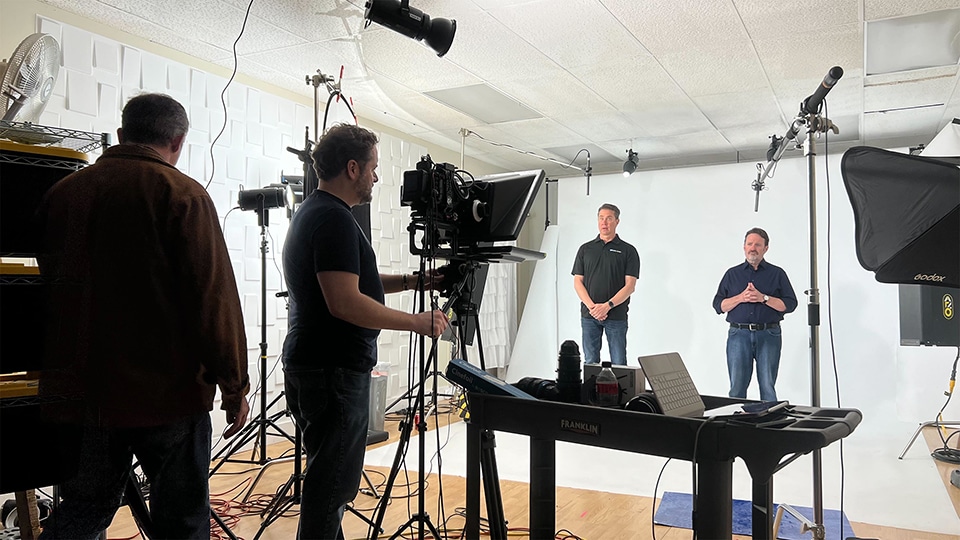
Industry research on video marketing consistently finds higher message retention from video than text—talking head marketing leans into that with a visible speaker.
The format works because it mimics a one-to-one conversation. Viewers see facial expression, hear tone, and process information faster than text alone—especially on mobile.
Best Channels for Talking Head Video Marketing
Match the video length and CTA to the channel:
- Landing pages — 60–120 seconds above the fold; one problem, one solution, one CTA
- Facebook / Instagram ads — 15–45 seconds; hook in the first 3 seconds
- YouTube — 1–3 minutes for consideration; longer for VSL-style pages
- LinkedIn — 30–90 seconds; expertise and proof over hard sell
- Email — 30–60 seconds; personalize the “from” line with a face they recognize
Repurpose one core script into cut-downs per channel instead of producing entirely separate concepts. Check Meta video ad specs and LinkedIn video requirements before you export finals.
Where Talking Head Marketing Fits in the Funnel

Top of funnel — awareness
Short talking head clips work for cold audiences when the hook is specific: a pain point, a myth to bust, or a bold claim backed immediately by proof. Lead with the problem, not your logo.
Middle of funnel — consideration
This is the strongest fit. Prospects know they have a problem; they need to trust you before they book, demo, or buy. A spokesperson who explains the offer, walks through objections, and shows credibility converts better than static copy alone.
Bottom of funnel — decision
Customer testimonial talking heads and founder “why we built this” videos reduce last-step friction. Pair with a clear CTA: schedule a call, start a trial, or complete checkout.
Landing Pages and High-Trust Offers
Put the spokesperson video where decision happens—hero section or immediately below the headline.
- High-ticket services (legal, medical, finance, consulting)
- B2B SaaS and enterprise software
- Coaching, courses, and info products
- E-commerce products that need demonstration or reassurance
One speaker, one offer, one next step. If the page has multiple products, use separate videos or separate pages—do not overload a single talking head with five offers.
Choosing the Right Spokesperson Format
Professional spokesperson
Polished delivery, consistent tone, fast turnaround. Strong for ads, landing pages, and campaigns where production quality signals brand credibility. Browse options on our Actors page.
Founder or executive
Maximum authenticity for mission-driven brands and personal brands. Viewers buy the person as much as the product.
Customer or employee
Best for testimonials and “how we use it” stories. Slightly rougher production is acceptable when the story is specific and believable.
Hybrid
Spokesperson for the hook and offer; b-roll, product shots, or motion graphics for demonstration. Common for product demos and VSLs.
Short-Form Ads and Social Proof
Paid social rewards talking head ads that look native—not over-produced.
- Open with a question or contrarian statement
- Caption every video (most viewers start muted)
- Single CTA per ad creative
- Test 2–3 hooks against the same body copy
Track click-through and cost per lead by hook, not just by campaign. The winning script often comes from the opening line, not the offer.
What to Measure
- View-through rate — are people staying past 25% / 50%?
- CTR — on ads and on-page play-to-CTA behavior
- Conversion rate — page with video vs. without (A/B when traffic allows)
- Cost per lead / cost per acquisition — by channel and by creative
For paid campaigns, also track view-through conversions in Google Ads alongside landing-page conversion rate.
Talking head marketing fails when the video is pretty but the script is vague. Fix the message before you fix the edit.
Frequently Asked Questions
What is talking head marketing?
Using spokesperson-led video across marketing channels so a real person delivers your message directly to the audience—building trust and driving action.
Is talking head marketing the same as talking head video ads?
Ads are one use case. Talking head marketing also includes landing pages, email, LinkedIn, YouTube, and long-form sales content. See talking head video ads for format specifics and pricing.
How long should a talking head marketing video be?
15–60 seconds for social ads; 60–120 seconds for landing pages; 2–20 minutes for VSLs and deep consideration content.
Should I use a professional spokesperson or film in-house?
In-house works for founder stories and authentic testimonials. Professional spokespeople deliver consistent polish for campaigns that need to scale or convert cold traffic.
Does talking head marketing work for B2B?
Yes—especially for explaining complex offers, supporting demos, and thought leadership on LinkedIn.
Conclusion
Talking head marketing works because it scales human connection: one clear message, one face, one CTA—repeated across the channels where your buyers actually decide.
Start with one high-intent page or one paid campaign, measure conversion, then expand. If you want strategy, scripting, and in-house production handled end-to-end, schedule a call with Talking Heads.
Explore our roster of professional video spokespeople and actors available for your campaign.